



Escrima Sticks - Arnis & Kali Sticks
-
 🔍︎ QUICK VIEW
$19.95
🔍︎ QUICK VIEW
$19.95 -
 🔍︎ QUICK VIEW
$26.95
🔍︎ QUICK VIEW
$26.95 -
 🔍︎ QUICK VIEW
$18.95
🔍︎ QUICK VIEW
$18.95 -
 🔍︎ QUICK VIEW
$89.95
🔍︎ QUICK VIEW
$89.95 -
 🔍︎ QUICK VIEW
$44.95
🔍︎ QUICK VIEW
$44.95 -
 🔍︎ QUICK VIEW
$209.95
🔍︎ QUICK VIEW
$209.95 -
 🔍︎ QUICK VIEW
-
 🔍︎ QUICK VIEW
$84.95
🔍︎ QUICK VIEW
$84.95 -
 🔍︎ QUICK VIEW
$89.95
🔍︎ QUICK VIEW
$89.95 -
 🔍︎ QUICK VIEW
$18.95
🔍︎ QUICK VIEW
$18.95 -
 🔍︎ QUICK VIEW
$44.95
🔍︎ QUICK VIEW
$44.95 -
 🔍︎ QUICK VIEW
-
 🔍︎ QUICK VIEW
-
 🔍︎ QUICK VIEW
$44.95
🔍︎ QUICK VIEW
$44.95 -
 🔍︎ QUICK VIEW
$44.95
🔍︎ QUICK VIEW
$44.95 -
 🔍︎ QUICK VIEW
$21.95
🔍︎ QUICK VIEW
$21.95 -
 🔍︎ QUICK VIEW
$19.95
🔍︎ QUICK VIEW
$19.95 -
 🔍︎ QUICK VIEW
$44.95
🔍︎ QUICK VIEW
$44.95 -
 🔍︎ QUICK VIEW
$19.95
🔍︎ QUICK VIEW
$19.95 -
 🔍︎ QUICK VIEW
-
 🔍︎ QUICK VIEW
-
 🔍︎ QUICK VIEW
$19.95
🔍︎ QUICK VIEW
$19.95 -
 🔍︎ QUICK VIEW
$44.95
🔍︎ QUICK VIEW
$44.95 -
 🔍︎ QUICK VIEW
-
 🔍︎ QUICK VIEW
-
 🔍︎ QUICK VIEW
$20.95
🔍︎ QUICK VIEW
$20.95 -
 🔍︎ QUICK VIEW
$74.95
🔍︎ QUICK VIEW
$74.95 -
 🔍︎ QUICK VIEW
$84.95
🔍︎ QUICK VIEW
$84.95 -
 🔍︎ QUICK VIEW
-
 🔍︎ QUICK VIEW
-
 🔍︎ QUICK VIEW
-
 🔍︎ QUICK VIEW
-
 🔍︎ QUICK VIEW
-
 🔍︎ QUICK VIEW
-
 🔍︎ QUICK VIEW
-
 🔍︎ QUICK VIEW
-
 🔍︎ QUICK VIEW
-
 🔍︎ QUICK VIEW
$42.95
🔍︎ QUICK VIEW
$42.95 -
 🔍︎ QUICK VIEW
-
 🔍︎ QUICK VIEW
$44.95
🔍︎ QUICK VIEW
$44.95 -
 🔍︎ QUICK VIEW
-
 🔍︎ QUICK VIEW
$44.95
🔍︎ QUICK VIEW
$44.95 -
 🔍︎ QUICK VIEW
$19.95
🔍︎ QUICK VIEW
$19.95
 (1)
(1) (1)
(1)Escrima Sticks - Arnis & Kali Sticks
Widely recognized as one of the most iconic weapons of Filipino martial arts, escrima sticks - also known as arnis sticks, kali sticks, or eskrima sticks - are versatile tools used for both training and self-defense. At Kombativ.com, we are proud to offer a modern take on these traditional weapons, providing state-of-the-art metal escrima sticks designed to meet the demands of today's martial artists. Whether you're training in eskrima, kali, or arnis, our high-quality kali sticks are engineered for performance, durability, and power.
Escrima, also spelled eskrima, is a general term used in the Philippines to describe their indigenous martial arts that focus on weapon-based fighting. Alongside kali and arnis, these three names are often used interchangeably, though each term has roots in different regions and traditions within the Philippines. "Escrima" comes from the Spanish word for "fencing," while "arnis" is derived from "arnes," referring to armor. "Kali" is believed by some to come from the word "kalis," a traditional Filipino blade. Though the terminology may vary, the core of the martial arts remains the same: weapon-based combat that emphasizes speed, precision, and tactical movement.
The history of arnis, eskrima, and kali dates back centuries, long before the Spanish colonized the Philippines. Indigenous warriors developed these fighting systems for survival, defending their communities against invaders and rival tribes. Early practitioners trained with bladed weapons such as bolos, kris, and kampilan, but over time, sticks became the preferred training tool. This allowed martial artists to practice strikes, blocks, disarms, and counterattacks in a safer, more sustainable way. Escrima sticks thus became central to Filipino martial arts training, because they are compact, easily maneuverable, and highly effective in close-quarters combat.
Historically, these kali sticks were made from rattan, a lightweight, flexible vine that doesn't splinter upon impact. Other traditional materials included oak and bahi wood, known for their density and strength. While traditional sticks are still widely used, modern martial artists now seek alternatives that provide increased longevity and durability without sacrificing functionality. This is where Kombativ.com sets itself apart.
Unlike many martial arts suppliers who rely solely on traditional wooden weapons, we specialize in metal escrima sticks crafted from high-performance materials like aluminum, steel, and advanced thermoplastics. Our aluminum arnis sticks are lightweight yet rugged, offering martial artists the ability to train with speed and precision. These sticks are ideal for sparring, forms practice, and demonstrations, delivering consistent performance without the wear and tear associated with wooden alternatives.
For practitioners seeking to build strength and endurance, steel escrima sticks provide a weighted challenge that develops muscle control and timing. Heavier than aluminum or rattan, these eskrima sticks simulate real combat fatigue, forcing you to refine your technique and improve your hand speed. After training with steel, transitioning back to lighter kali sticks or even wooden arnis sticks can result in noticeable improvements in speed and efficiency.
Another advantage of modern materials is consistency. Unlike natural wood, which can vary in density and straightness, metal eskrima sticks are precision-machined for perfect balance and symmetry. This makes them ideal for competition settings where uniform performance is essential. Whether you're training solo, sparring with a partner, or performing in front of an audience, your kali sticks from Kombativ will deliver dependable results every time.
Beyond their function in training, escrima sticks have a deep cultural and historical significance. Filipino warriors would often use whatever tools were available - sticks, blades, farming implements - to defend themselves during colonial oppression, particularly during the Spanish and American occupations. Over time, arnis, kali, and eskrima evolved into formalized systems, each with its own unique flavor, but always grounded in practical self-defense. The Philippines even declared arnis its national martial art and sport in 2009, cementing its importance in Filipino heritage.
Training with arnis sticks is not only a physical discipline but also a way to preserve a vital part of Filipino culture. Modern schools around the world teach these arts, emphasizing the use of single stick, double stick, and even stick-and-dagger combinations. Movements are fluid, with practitioners learning to flow from offense to defense in an instant. Techniques focus on striking, blocking, disarming, and redirection, often incorporating elements of footwork and body mechanics to maximize effectiveness.
At Kombativ, we understand that martial artists come from a wide range of backgrounds, from beginners exploring the fundamentals to advanced practitioners seeking to refine their techniques. That's why our escrima sticks come in various weights, lengths, and materials. Whether you're looking for a lightweight kali stick for speed drills or a heavy-duty eskrima stick for strength conditioning, you'll find it here in our specialized selection.
We're also proud to support the growing global community of Filipino martial arts practitioners. As interest in eskrima, kali, and arnis continues to rise, so too does the demand for reliable training equipment. Kombativ is committed to providing innovative weapons that honor tradition while embracing the future. Our metal arnis sticks are a fusion of history, craftsmanship, and modern technology, designed to elevate your training to the next level.
Incorporating escrima, arnis, and kali into your martial arts journey offers a dynamic way to improve your coordination, reflexes, and strategic thinking. Whether you're training for self-defense, competition, or cultural appreciation, the right eskrima sticks can make all the difference. Let Kombativ.com be your trusted source for durable, expertly engineered kali sticks that deliver both tradition and innovation in every strike.
The terms Eskrima, Kali, and Arnis are often used interchangeably, but each of them has unique historical and cultural nuances. While they all refer to Filipino martial arts that emphasize the use of weapons - specifically sticks, blades, and other tools - they come from different regions of the Philippines and developed in slightly different contexts. Understanding the distinctions between these terms can give practitioners a deeper appreciation of the art and its rich cultural heritage.
Kali is perhaps the most internationally recognized name of the three. It is most commonly associated with the southern regions of the Philippines, particularly Mindanao. There are several theories regarding the origins of the word "Kali," but one of the most accepted explanations is that it derives from the Filipino word "kalis", which means "sword." Some martial artists also believe that Kali is a derivative of the words "ka" (which means "hand" in some Filipino languages) and "li" (meaning "to flow" or "to move"). Thus, Kali could be interpreted as "hand movements" or "flowing hand."
The name Kali was popularized by martial arts instructors in the mid-20th century, particularly in the United States, where Filipino martial arts gained traction. However, Kali is not just a term for a martial art - it also refers to a philosophy of combat that focuses on fluid movement, adaptability, and the integration of multiple weapons, including sticks, blades, and even empty-hand techniques. Kali also often emphasizes the concept of "flowing" or transitioning from one movement to another, much like water moving through different obstacles.
In practice, Kali tends to focus more on weaponry and often incorporates bladed weapons in addition to sticks. Kali systems teach how to defend against, disarm, and counter different types of attacks, whether from blades, sticks, or even improvised tools. The focus is on enhancing the practitioner's ability to respond quickly, efficiently, and decisively.
Arnis (sometimes referred to as Arnis de Mano) is often considered the official national martial art of the Philippines, declared by the Philippine Congress in 2009. The name Arnis comes from the word "arnes", which means armor, and it originally referred to the protective gear worn by practitioners. The term Arnis primarily refers to the use of sticks or bladed weapons, but like Kali, it can encompass a broader range of weapons and empty-hand techniques.
The term Arnis is more commonly used in northern and central parts of the Philippines, especially in regions like Luzon. Arnis is primarily associated with a stick-based training system, which was developed and refined over centuries. Like Kali, it also places a significant emphasis on the use of the baston (a wooden stick), which is often used for solo drills, partner training, and sparring.
In practice, Arnis is often more structured and systematic in comparison to Kali, with specific movements and techniques drilled in a linear fashion. Arnis schools tend to focus on precise strikes, blocking techniques, and drills designed to develop reflexes, coordination, and tactical decision-making in combat. However, the terms Kali and Arnis have increasingly become synonymous in modern Filipino martial arts due to cross-pollination of styles, and both terms are now used to describe similar systems that include the use of sticks, blades, and even hand-to-hand combat.
The term Eskrima (also spelled Escrima) is most commonly used in the central and northern Philippines and is associated with the practice of stick fighting. The word Eskrima comes from the Spanish term "esgrima," meaning fencing. The Spanish influence on the Philippines, due to over three centuries of colonial rule, contributed to the development of this term and the popularity of fencing techniques, which were then adapted into the Filipino martial arts system.
While Eskrima is often synonymous with Kali and Arnis, it tends to emphasize fencing-style fighting techniques, such as thrusting, parrying, and fluid counterattacks. The terminology itself has been widely adopted in the international community, where Eskrima is typically used to refer to a full system of Filipino martial arts, whether or not the practitioner is focusing on sticks, blades, or empty-hand combat.
Eskrima practitioners often begin training with single stick techniques, then progress to double stick (two bastons), and later incorporate other weapons, such as knives and swords, into their training. One of the key focuses of Eskrima is versatility - teaching the practitioner how to quickly adapt to different weapons, distances, and scenarios. Practitioners learn how to switch between offensive and defensive techniques smoothly, using footwork, angles, and precise strikes to gain an advantage over an opponent.
Despite the regional differences and slight variations in emphasis, all three styles - Eskrima, Kali, and Arnis - share core principles. These include the focus on weaponry (typically sticks, blades, or improvised objects), flowing movements, adaptability, and practical self-defense. All three styles teach the concept of using both offensive and defensive techniques in tandem, allowing practitioners to seamlessly transition between the two.
Additionally, the "weapon first" philosophy is central to all three martial arts systems. The idea is that weapons are not just tools of combat; they are extensions of the practitioner's body and mind. Through weapon training, Filipino martial artists enhance their reflexes, timing, spatial awareness, and decision-making - all of which transfer over to hand-to-hand combat.
In summary, while Eskrima, Kali, and Arnis all refer to Filipino martial arts systems that emphasize weapon-based combat, the differences primarily lie in the terminology and historical influences of each term. Kali is often associated with the southern Philippines and focuses heavily on fluidity, bladed weapons, and adaptability. Arnis is more widely used in the north and central Philippines, with a focus on stick-based training and precision. Eskrima, the term influenced by Spanish fencing, is commonly used to describe the full system of Filipino martial arts, emphasizing versatility and practicality in various combat situations.
Regardless of the name, each system offers valuable skills for self-defense, discipline, and personal growth, making Filipino martial arts some of the most versatile and effective in the world today.
The escrima sticks, kali sticks, and arnis sticks are all integral parts of Filipino martial arts, but they are used in slightly different ways depending on the system of combat being practiced. While the terminology often overlaps - many martial artists use the terms interchangeably - the sticks themselves may vary in length, weight, material, and purpose depending on whether the practitioner is training in Eskrima, Kali, or Arnis. Below, we'll break down the key differences between the sticks used in these three martial arts systems, and how they contribute to a practitioner's training.
Most Escrima sticks range from about 26 inches to 30 inches in length, and the right size usually depends on your training style, instructor preference, and comfort level. A common rule of thumb is that the stick should be roughly the length of your arm from your armpit to your palm, which usually puts most adults in the 26 to 28 inch range. Many traditional Filipino martial arts systems standardize around 28 inches, since it offers a good balance of reach, control, and maneuverability.
If you are training in a school or under an instructor, it is always best to follow the size they recommend for consistency during drills and partner training. Shorter sticks can feel faster and easier to control, while slightly longer sticks can provide extra reach and striking leverage. As long as the stick is comfortable to handle and not excessively long for your arm length, you will be able to train effectively.
The most commonly used standard length for Escrima sticks is 28 inches. This length has become widely accepted in Filipino martial arts because it offers an ideal balance of speed, control, power, and practicality during training. Many traditional Eskrima, Kali, and Arnis systems structure their drills and techniques around sticks in this range, which makes 28 inches a reliable default size for most students and instructors.
That said, there is still some variation depending on style and personal preference. Some practitioners prefer 26-inch sticks for faster movement and tighter close-range work, while others use 30-inch sticks for added reach and striking leverage. Youth students or smaller practitioners may also benefit from slightly shorter sticks to ensure safe handling and better control. As long as the stick fits your training needs and allows you to move smoothly without strain, it will function well for most Escrima, Kali, and Arnis training environments.
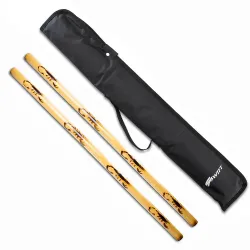
Escrima sticks are commonly associated with two-stick training, so many people assume they always come as a pair, but that is not always the case. Some Escrima sticks are sold individually, while others are packaged as a matched set of two. It usually depends on the brand, the training style the sticks are intended for, and how the manufacturer chooses to package them. Many Filipino martial arts drills use two sticks, but plenty of systems also train single-stick applications, which is why both options exist on the market.
If you are training in a school or working with an instructor, it is a good idea to check whether they prefer single-stick work, double-stick drills, or both, since that may influence what you need to purchase. When shopping online, product descriptions will normally state clearly whether the listing is for one stick or a pair, and it is important to read that carefully so you get exactly what you need for your training. Whether bought individually or as a set, the key is making sure the sticks match in length, weight, and material so your training feels consistent and balanced.
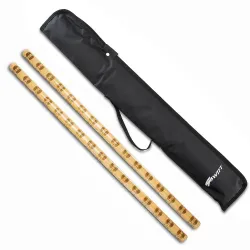
The most popular and widely recommended material for Escrima sticks is rattan. Rattan is lightweight, durable, and naturally flexible, which helps absorb impact during strikes without shattering like hardwood can. Because it resists splintering and handles repeated contact training well, rattan has become the standard material used in many Filipino martial arts schools around the world. It is ideal for drills, partner work, and sparring-style training where safety, control, and longevity are important.
Hardwood Escrima sticks are another traditional option, and they tend to be heavier and denser. This added weight can be useful for strength conditioning or certain demonstration styles, but hardwood is more likely to crack or splinter when repeatedly struck against other sticks. Synthetic Escrima sticks made from polymer or plastic-based materials are also available, offering excellent durability and weather resistance, although they usually feel different from natural rattan.
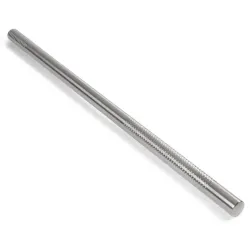
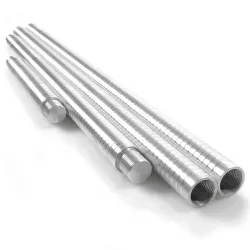
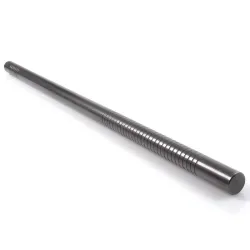
Metal Escrima sticks, such as aluminum or steel, are designed primarily for durability and weight training rather than frequent stick-to-stick contact. Aluminum sticks are lighter than steel and sometimes used for flow drills or light conditioning, while steel sticks are significantly heavier and mainly used for strength development or specialty training. Because metal sticks can cause more severe damage to training partners and can damage other sticks, most practitioners reserve them for controlled solo practice rather than regular partner striking drills.
For most students and instructors, rattan remains the best all-around choice thanks to its balance of safety, durability, and realistic training feel. Other materials have their place depending on your goals, but rattan is typically the most versatile and widely approved option for daily Filipino martial arts training.
The biggest difference between rattan and hardwood Escrima sticks comes down to durability, impact behavior, and training purpose. Rattan is the most commonly used material in Filipino martial arts because it is lightweight, flexible, and able to absorb impact without splintering. When rattan gets damaged, it usually develops soft frays instead of sharp breaks, which makes it much safer for regular partner training, flow drills, and contact practice. The lighter weight also allows faster hand speed and smoother transitions, which is why most instructors prefer rattan for everyday training.
Hardwood Escrima sticks are heavier, denser, and hit with more force, which makes them better suited for strength conditioning, power development, and certain demonstration purposes. However, hardwood can crack, chip, or splinter when repeatedly struck against other sticks, which can create sharp edges and potential safety issues if not monitored carefully. Because of this, many practitioners use hardwood sticks for controlled training or solo practice rather than frequent heavy contact drills. If you want speed, safety, and long-lasting training tools, rattan is usually the better choice. If you want added weight and resistance for conditioning or for a stick that feels more solid in the hand, hardwood can be a great option when used appropriately.
For most beginners, the best Escrima sticks are lightweight rattan sticks in a standard length of around 26 to 28 inches. Rattan is widely recommended for new students because it is durable, flexible, and far less likely to splinter sharply compared to hardwood. This makes training safer, especially during contact drills or partner practice where mistakes can happen as techniques are being learned. The lighter weight of rattan also helps beginners develop speed, control, and proper technique without feeling like they are fighting the stick during movement.
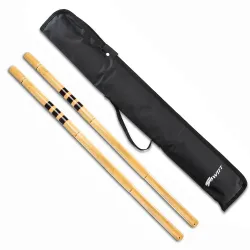
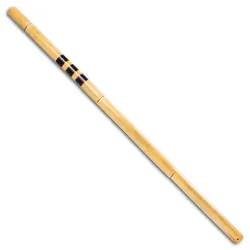
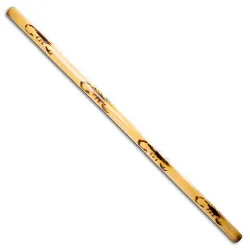
Beginners should also look for sticks that are straight, well-balanced, and comfortable to hold. Many rattan sticks include burned grip patterns or skin-on finishes that add traction and durability, which can be helpful for students still getting used to hand positioning. Most instructors recommend avoiding heavy hardwood or metal Escrima sticks when starting out, since those are better suited for advanced conditioning or specialty training. Starting with quality rattan allows beginners to focus on learning techniques correctly and building confidence before moving into heavier or more specialized Escrima stick options.
Escrima sticks can be very effective for self defense when used by someone who has trained with them. Filipino martial arts were built around practical stick and impact-weapon techniques, so many systems teach real-world striking, blocking, limb targeting, and disarming skills. Escrima sticks are lightweight, fast, and easy to maneuver, allowing practitioners to generate surprising speed and power while still maintaining control. Because training emphasizes timing, accuracy, and awareness, people who regularly practice with Escrima sticks often develop strong reflexes and confidence in close-range situations.
However, like any self defense tool, effectiveness depends on training, judgment, and responsible use. Most people do not typically carry Escrima sticks daily, so many Filipino martial arts schools also teach how the same movements and concepts can apply to improvised objects such as canes, flashlights, batons, and similar everyday items. Local laws can also vary regarding what can be carried in public, so anyone considering using a stick or similar object for protection should understand the legal guidelines in their area. When trained properly and used responsibly, Escrima sticks can absolutely be a practical and capable self defense tool.
In most places, Escrima sticks are legal to own, especially when they are used for martial arts training, cultural practice, or recreational purposes. They are commonly treated like training equipment similar to staffs, batons, or sports gear, and many martial arts schools around the world train with them openly without issue. Because they are primarily associated with structured martial arts systems like Eskrima, Kali, and Arnis, most regions do not classify them the same way as restricted blades or prohibited weapons.
However, laws can vary depending on where you live, and what is legal in one city, state, or country may not be legal in another. Even if they are legal to own at home or in a training facility, some areas may restrict carrying them in public or bringing them into certain locations or events. If you plan to transport or carry Escrima sticks outside of training, it is always a good idea to check local regulations or speak with a knowledgeable legal authority to make sure you are compliant with the rules in your area. Responsible ownership and awareness of your local laws is the best way to enjoy training without any legal concerns.
The "skin" on rattan Escrima sticks refers to the natural outer layer of the rattan vine. When a stick is described as "skin on," it means this outer layer has been left intact. Skin-on rattan sticks are generally more durable because this outer shell helps reinforce the structure, reducing fraying and slowing down wear from repeated impact training. The surface also tends to feel slightly smoother and harder, which many practitioners prefer for longevity, aesthetics, and a more traditional look.
"Skin off" Escrima sticks have had this outer layer removed, which gives them a slightly lighter feel and a softer surface. Because the protective shell is gone, skin-off sticks may show wear faster and can develop small fibers or frays with heavy use, but many people actually like this because the sticks absorb shock differently and can feel a little more forgiving on impact. Some practitioners also prefer the improved grip texture that develops as skin-off sticks break in over time.
Neither option is "better" in an absolute sense. Skin-on sticks are usually chosen for durability and a cleaner appearance, while skin-off sticks are often preferred for feel, lighter weight, and the way they break in with training. The right choice really comes down to your training style, how much impact your sticks will take, and personal preference.
Escrima, Kali, and Arnis Explained
Escrima, also spelled eskrima, is a general term used in the Philippines to describe their indigenous martial arts that focus on weapon-based fighting. Alongside kali and arnis, these three names are often used interchangeably, though each term has roots in different regions and traditions within the Philippines. "Escrima" comes from the Spanish word for "fencing," while "arnis" is derived from "arnes," referring to armor. "Kali" is believed by some to come from the word "kalis," a traditional Filipino blade. Though the terminology may vary, the core of the martial arts remains the same: weapon-based combat that emphasizes speed, precision, and tactical movement.
Historical Roots of Filipino Stick Fighting
The history of arnis, eskrima, and kali dates back centuries, long before the Spanish colonized the Philippines. Indigenous warriors developed these fighting systems for survival, defending their communities against invaders and rival tribes. Early practitioners trained with bladed weapons such as bolos, kris, and kampilan, but over time, sticks became the preferred training tool. This allowed martial artists to practice strikes, blocks, disarms, and counterattacks in a safer, more sustainable way. Escrima sticks thus became central to Filipino martial arts training, because they are compact, easily maneuverable, and highly effective in close-quarters combat.
Traditional Escrima Stick Materials
Historically, these kali sticks were made from rattan, a lightweight, flexible vine that doesn't splinter upon impact. Other traditional materials included oak and bahi wood, known for their density and strength. While traditional sticks are still widely used, modern martial artists now seek alternatives that provide increased longevity and durability without sacrificing functionality. This is where Kombativ.com sets itself apart.
Modern Metal Escrima Sticks
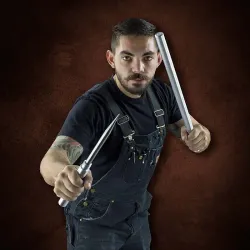
Unlike many martial arts suppliers who rely solely on traditional wooden weapons, we specialize in metal escrima sticks crafted from high-performance materials like aluminum, steel, and advanced thermoplastics. Our aluminum arnis sticks are lightweight yet rugged, offering martial artists the ability to train with speed and precision. These sticks are ideal for sparring, forms practice, and demonstrations, delivering consistent performance without the wear and tear associated with wooden alternatives.
For practitioners seeking to build strength and endurance, steel escrima sticks provide a weighted challenge that develops muscle control and timing. Heavier than aluminum or rattan, these eskrima sticks simulate real combat fatigue, forcing you to refine your technique and improve your hand speed. After training with steel, transitioning back to lighter kali sticks or even wooden arnis sticks can result in noticeable improvements in speed and efficiency.
Precision, Balance, and Consistency
Another advantage of modern materials is consistency. Unlike natural wood, which can vary in density and straightness, metal eskrima sticks are precision-machined for perfect balance and symmetry. This makes them ideal for competition settings where uniform performance is essential. Whether you're training solo, sparring with a partner, or performing in front of an audience, your kali sticks from Kombativ will deliver dependable results every time.
Cultural Significance of Filipino Martial Arts
Beyond their function in training, escrima sticks have a deep cultural and historical significance. Filipino warriors would often use whatever tools were available - sticks, blades, farming implements - to defend themselves during colonial oppression, particularly during the Spanish and American occupations. Over time, arnis, kali, and eskrima evolved into formalized systems, each with its own unique flavor, but always grounded in practical self-defense. The Philippines even declared arnis its national martial art and sport in 2009, cementing its importance in Filipino heritage.
Training Methods and Applications
Training with arnis sticks is not only a physical discipline but also a way to preserve a vital part of Filipino culture. Modern schools around the world teach these arts, emphasizing the use of single stick, double stick, and even stick-and-dagger combinations. Movements are fluid, with practitioners learning to flow from offense to defense in an instant. Techniques focus on striking, blocking, disarming, and redirection, often incorporating elements of footwork and body mechanics to maximize effectiveness.
Choosing the Right Escrima Sticks
At Kombativ, we understand that martial artists come from a wide range of backgrounds, from beginners exploring the fundamentals to advanced practitioners seeking to refine their techniques. That's why our escrima sticks come in various weights, lengths, and materials. Whether you're looking for a lightweight kali stick for speed drills or a heavy-duty eskrima stick for strength conditioning, you'll find it here in our specialized selection.
We're also proud to support the growing global community of Filipino martial arts practitioners. As interest in eskrima, kali, and arnis continues to rise, so too does the demand for reliable training equipment. Kombativ is committed to providing innovative weapons that honor tradition while embracing the future. Our metal arnis sticks are a fusion of history, craftsmanship, and modern technology, designed to elevate your training to the next level.
Incorporating escrima, arnis, and kali into your martial arts journey offers a dynamic way to improve your coordination, reflexes, and strategic thinking. Whether you're training for self-defense, competition, or cultural appreciation, the right eskrima sticks can make all the difference. Let Kombativ.com be your trusted source for durable, expertly engineered kali sticks that deliver both tradition and innovation in every strike.
What is the Difference Between Eskrima, Kali, and Arnis?
The terms Eskrima, Kali, and Arnis are often used interchangeably, but each of them has unique historical and cultural nuances. While they all refer to Filipino martial arts that emphasize the use of weapons - specifically sticks, blades, and other tools - they come from different regions of the Philippines and developed in slightly different contexts. Understanding the distinctions between these terms can give practitioners a deeper appreciation of the art and its rich cultural heritage.
Kali
Kali is perhaps the most internationally recognized name of the three. It is most commonly associated with the southern regions of the Philippines, particularly Mindanao. There are several theories regarding the origins of the word "Kali," but one of the most accepted explanations is that it derives from the Filipino word "kalis", which means "sword." Some martial artists also believe that Kali is a derivative of the words "ka" (which means "hand" in some Filipino languages) and "li" (meaning "to flow" or "to move"). Thus, Kali could be interpreted as "hand movements" or "flowing hand."
The name Kali was popularized by martial arts instructors in the mid-20th century, particularly in the United States, where Filipino martial arts gained traction. However, Kali is not just a term for a martial art - it also refers to a philosophy of combat that focuses on fluid movement, adaptability, and the integration of multiple weapons, including sticks, blades, and even empty-hand techniques. Kali also often emphasizes the concept of "flowing" or transitioning from one movement to another, much like water moving through different obstacles.
In practice, Kali tends to focus more on weaponry and often incorporates bladed weapons in addition to sticks. Kali systems teach how to defend against, disarm, and counter different types of attacks, whether from blades, sticks, or even improvised tools. The focus is on enhancing the practitioner's ability to respond quickly, efficiently, and decisively.
Arnis
Arnis (sometimes referred to as Arnis de Mano) is often considered the official national martial art of the Philippines, declared by the Philippine Congress in 2009. The name Arnis comes from the word "arnes", which means armor, and it originally referred to the protective gear worn by practitioners. The term Arnis primarily refers to the use of sticks or bladed weapons, but like Kali, it can encompass a broader range of weapons and empty-hand techniques.
The term Arnis is more commonly used in northern and central parts of the Philippines, especially in regions like Luzon. Arnis is primarily associated with a stick-based training system, which was developed and refined over centuries. Like Kali, it also places a significant emphasis on the use of the baston (a wooden stick), which is often used for solo drills, partner training, and sparring.
In practice, Arnis is often more structured and systematic in comparison to Kali, with specific movements and techniques drilled in a linear fashion. Arnis schools tend to focus on precise strikes, blocking techniques, and drills designed to develop reflexes, coordination, and tactical decision-making in combat. However, the terms Kali and Arnis have increasingly become synonymous in modern Filipino martial arts due to cross-pollination of styles, and both terms are now used to describe similar systems that include the use of sticks, blades, and even hand-to-hand combat.
Eskrima
The term Eskrima (also spelled Escrima) is most commonly used in the central and northern Philippines and is associated with the practice of stick fighting. The word Eskrima comes from the Spanish term "esgrima," meaning fencing. The Spanish influence on the Philippines, due to over three centuries of colonial rule, contributed to the development of this term and the popularity of fencing techniques, which were then adapted into the Filipino martial arts system.
While Eskrima is often synonymous with Kali and Arnis, it tends to emphasize fencing-style fighting techniques, such as thrusting, parrying, and fluid counterattacks. The terminology itself has been widely adopted in the international community, where Eskrima is typically used to refer to a full system of Filipino martial arts, whether or not the practitioner is focusing on sticks, blades, or empty-hand combat.
Eskrima practitioners often begin training with single stick techniques, then progress to double stick (two bastons), and later incorporate other weapons, such as knives and swords, into their training. One of the key focuses of Eskrima is versatility - teaching the practitioner how to quickly adapt to different weapons, distances, and scenarios. Practitioners learn how to switch between offensive and defensive techniques smoothly, using footwork, angles, and precise strikes to gain an advantage over an opponent.
Common Threads
Despite the regional differences and slight variations in emphasis, all three styles - Eskrima, Kali, and Arnis - share core principles. These include the focus on weaponry (typically sticks, blades, or improvised objects), flowing movements, adaptability, and practical self-defense. All three styles teach the concept of using both offensive and defensive techniques in tandem, allowing practitioners to seamlessly transition between the two.
Additionally, the "weapon first" philosophy is central to all three martial arts systems. The idea is that weapons are not just tools of combat; they are extensions of the practitioner's body and mind. Through weapon training, Filipino martial artists enhance their reflexes, timing, spatial awareness, and decision-making - all of which transfer over to hand-to-hand combat.
Conclusion
In summary, while Eskrima, Kali, and Arnis all refer to Filipino martial arts systems that emphasize weapon-based combat, the differences primarily lie in the terminology and historical influences of each term. Kali is often associated with the southern Philippines and focuses heavily on fluidity, bladed weapons, and adaptability. Arnis is more widely used in the north and central Philippines, with a focus on stick-based training and precision. Eskrima, the term influenced by Spanish fencing, is commonly used to describe the full system of Filipino martial arts, emphasizing versatility and practicality in various combat situations.
Regardless of the name, each system offers valuable skills for self-defense, discipline, and personal growth, making Filipino martial arts some of the most versatile and effective in the world today.
What is the Difference Between the Escrima Sticks, Kali Sticks, and Arnis Sticks?
The escrima sticks, kali sticks, and arnis sticks are all integral parts of Filipino martial arts, but they are used in slightly different ways depending on the system of combat being practiced. While the terminology often overlaps - many martial artists use the terms interchangeably - the sticks themselves may vary in length, weight, material, and purpose depending on whether the practitioner is training in Eskrima, Kali, or Arnis. Below, we'll break down the key differences between the sticks used in these three martial arts systems, and how they contribute to a practitioner's training.
Length of the Sticks
The length of the escrima sticks, kali sticks, and arnis sticks can vary, but there are some general guidelines depending on the specific martial art system:
Material of the Sticks
While the material of the sticks used in Eskrima, Kali, and Arnis can vary, the traditional choice has historically been rattan due to its flexibility, durability, and shock-absorbing properties. However, modern martial artists now use a wide range of materials for different training purposes. Here's a breakdown of the most common materials:
Weight of the Sticks
The weight of the sticks used in Eskrima, Kali, and Arnis will directly impact a practitioner's ability to execute their techniques. Here's how the weight differs for each system:
Purpose and Training Applications
In summary, while escrima sticks, kali sticks, and arnis sticks share many similarities - being primarily made from rattan or modern materials like aluminum and steel - the key differences lie in their length, weight, and the specific martial arts system they are used for. Understanding these nuances helps practitioners select the right type of stick based on their training goals, whether it's for speed, strength, or precision.
The length of the escrima sticks, kali sticks, and arnis sticks can vary, but there are some general guidelines depending on the specific martial art system:
- Eskrima Sticks: The standard length of eskrima sticks typically ranges from 26 inches to 28 inches (66-71 cm). This length is considered optimal for both close and medium-range combat, allowing practitioners to efficiently perform striking, blocking, and disarming techniques. The sticks used in Eskrima often reflect the historical influence of Spanish fencing, where the use of shorter, more maneuverable weapons was emphasized. Eskrima sticks are typically balanced and light enough for rapid, fluid movements while still providing the necessary weight for striking and blocking.
- Kali Sticks: Kali sticks are usually 28 inches to 30 inches (71-76 cm) in length. These sticks are often longer than eskrima sticks, which allows practitioners to execute wider strikes and longer-range techniques. The longer length also allows for more aggressive strikes, counters, and parries, making them ideal for situations where practitioners might need to defend against multiple attackers or use their weapon to control space. In Kali, there is a greater emphasis on the ability to engage opponents at longer distances, which is why the longer kali sticks are often preferred.
- Arnis Sticks: The length of arnis sticks typically falls in the range of 26 inches to 28 inches (66-71 cm), which is quite similar to eskrima sticks. However, arnis sticks may also come in slightly shorter or longer variations depending on the specific style or school of Arnis being practiced. Traditional arnis sticks are often made of rattan, which makes them lightweight and easy to handle, but the length is usually chosen to balance the need for speed and the need for control in close-quarters combat. In modern Arnis systems, some practitioners opt for sticks that are slightly thicker or heavier, depending on their training goals.
Material of the Sticks
While the material of the sticks used in Eskrima, Kali, and Arnis can vary, the traditional choice has historically been rattan due to its flexibility, durability, and shock-absorbing properties. However, modern martial artists now use a wide range of materials for different training purposes. Here's a breakdown of the most common materials:
- Eskrima Sticks: Traditionally, eskrima sticks were made from rattan, but nowadays, martial artists may also use sticks made from wood, aluminum, or steel, especially for advanced training. Rattan sticks are still the most common for traditional practice, as they are lightweight, flexible, and provide a good balance of speed and control. Some practitioners use metal escrima sticks made from aluminum or steel for durability and strength, particularly in sparring or for building strength during practice.
- Kali Sticks: Kali sticks can be made from a variety of materials, but rattan is also the traditional choice. The flexibility of rattan allows for more dynamic movements and is less likely to break under impact. In modern Kali training, martial artists may also use aluminum, steel, or carbon fiber sticks, especially for more intense training or competition. These modern materials offer durability and consistency, but they also require more control when performing strikes, as they do not have the same shock-absorbing properties as rattan.
- Arnis Sticks: Similar to eskrima sticks, arnis sticks were traditionally made from rattan, but today, they may be crafted from a variety of materials. Many Arnis practitioners still prefer rattan for its flexibility and lighter weight, but modern arnis sticks are often made from wood (such as oak or bahi wood), as well as metal (especially aluminum or steel). Aluminum arnis sticks are a popular choice for practitioners seeking durability and strength, especially for sparring or competition training.
Weight of the Sticks
The weight of the sticks used in Eskrima, Kali, and Arnis will directly impact a practitioner's ability to execute their techniques. Here's how the weight differs for each system:
- Eskrima Sticks: Eskrima sticks are generally designed to be light and agile, with an average weight of about 5-6 ounces (140-170 grams). This lightweight construction allows for rapid movements and quick strikes, making them ideal for practicing fluidity and speed. The lighter weight is beneficial for training in precision and reflexes, as practitioners need to move quickly and change direction on a dime.
- Kali Sticks: Kali sticks are typically a little heavier than eskrima sticks, with an average weight ranging from 6 to 8 ounces (170-225 grams). This additional weight provides a more substantial feel, especially when performing longer strikes or heavier blocking techniques. While still light enough to facilitate speed, the heavier weight of kali sticks allows practitioners to develop strength and control, particularly when using longer-range strikes and defenses.
- Arnis Sticks: The weight of arnis sticks is similar to eskrima sticks, usually ranging from 4 to 6 ounces (113-170 grams). These sticks are designed to be light enough for quick movements, but they can also come in heavier versions made from wood or metal. The balance of lightness and strength is key in Arnis, where practitioners need to perform both quick attacks and precise blocks, all while maintaining control over the weapon.
Purpose and Training Applications
- Eskrima Sticks are primarily used in systems where quick, fluid motion and adaptability are emphasized. The primary focus is on close-range and medium-range combat, with techniques designed to build speed, accuracy, and timing. Eskrima sticks are perfect for sparring, drills, and self-defense, where the practitioner must be able to quickly react to an opponent's movements.
- Kali Sticks, being slightly longer and heavier, are often used in training for longer-range strikes, controls, and defenses. They are great for developing strength and control over longer distances and are commonly used in fighting multiple opponents or in defensive scenarios where a practitioner may need to maintain space or fight off attackers.
- Arnis Sticks are generally the most versatile, used in training for both offensive and defensive applications. The relatively lighter weight of arnis sticks makes them ideal for quick reflex training, rapid attack, and counterstrike drills. They are commonly used in competitions, sparring, and general self-defense training.
In summary, while escrima sticks, kali sticks, and arnis sticks share many similarities - being primarily made from rattan or modern materials like aluminum and steel - the key differences lie in their length, weight, and the specific martial arts system they are used for. Understanding these nuances helps practitioners select the right type of stick based on their training goals, whether it's for speed, strength, or precision.
What size Escrima sticks should I buy?
Most Escrima sticks range from about 26 inches to 30 inches in length, and the right size usually depends on your training style, instructor preference, and comfort level. A common rule of thumb is that the stick should be roughly the length of your arm from your armpit to your palm, which usually puts most adults in the 26 to 28 inch range. Many traditional Filipino martial arts systems standardize around 28 inches, since it offers a good balance of reach, control, and maneuverability.
If you are training in a school or under an instructor, it is always best to follow the size they recommend for consistency during drills and partner training. Shorter sticks can feel faster and easier to control, while slightly longer sticks can provide extra reach and striking leverage. As long as the stick is comfortable to handle and not excessively long for your arm length, you will be able to train effectively.
What is the standard length of an Escrima stick?
The most commonly used standard length for Escrima sticks is 28 inches. This length has become widely accepted in Filipino martial arts because it offers an ideal balance of speed, control, power, and practicality during training. Many traditional Eskrima, Kali, and Arnis systems structure their drills and techniques around sticks in this range, which makes 28 inches a reliable default size for most students and instructors.
That said, there is still some variation depending on style and personal preference. Some practitioners prefer 26-inch sticks for faster movement and tighter close-range work, while others use 30-inch sticks for added reach and striking leverage. Youth students or smaller practitioners may also benefit from slightly shorter sticks to ensure safe handling and better control. As long as the stick fits your training needs and allows you to move smoothly without strain, it will function well for most Escrima, Kali, and Arnis training environments.
Do Escrima sticks come as a pair or individually?
Escrima sticks are commonly associated with two-stick training, so many people assume they always come as a pair, but that is not always the case. Some Escrima sticks are sold individually, while others are packaged as a matched set of two. It usually depends on the brand, the training style the sticks are intended for, and how the manufacturer chooses to package them. Many Filipino martial arts drills use two sticks, but plenty of systems also train single-stick applications, which is why both options exist on the market.
If you are training in a school or working with an instructor, it is a good idea to check whether they prefer single-stick work, double-stick drills, or both, since that may influence what you need to purchase. When shopping online, product descriptions will normally state clearly whether the listing is for one stick or a pair, and it is important to read that carefully so you get exactly what you need for your training. Whether bought individually or as a set, the key is making sure the sticks match in length, weight, and material so your training feels consistent and balanced.
What material is best for Escrima sticks?
The most popular and widely recommended material for Escrima sticks is rattan. Rattan is lightweight, durable, and naturally flexible, which helps absorb impact during strikes without shattering like hardwood can. Because it resists splintering and handles repeated contact training well, rattan has become the standard material used in many Filipino martial arts schools around the world. It is ideal for drills, partner work, and sparring-style training where safety, control, and longevity are important.
Hardwood Escrima sticks are another traditional option, and they tend to be heavier and denser. This added weight can be useful for strength conditioning or certain demonstration styles, but hardwood is more likely to crack or splinter when repeatedly struck against other sticks. Synthetic Escrima sticks made from polymer or plastic-based materials are also available, offering excellent durability and weather resistance, although they usually feel different from natural rattan.
Metal Escrima sticks, such as aluminum or steel, are designed primarily for durability and weight training rather than frequent stick-to-stick contact. Aluminum sticks are lighter than steel and sometimes used for flow drills or light conditioning, while steel sticks are significantly heavier and mainly used for strength development or specialty training. Because metal sticks can cause more severe damage to training partners and can damage other sticks, most practitioners reserve them for controlled solo practice rather than regular partner striking drills.
For most students and instructors, rattan remains the best all-around choice thanks to its balance of safety, durability, and realistic training feel. Other materials have their place depending on your goals, but rattan is typically the most versatile and widely approved option for daily Filipino martial arts training.
What is the difference between rattan and hardwood Escrima sticks?
The biggest difference between rattan and hardwood Escrima sticks comes down to durability, impact behavior, and training purpose. Rattan is the most commonly used material in Filipino martial arts because it is lightweight, flexible, and able to absorb impact without splintering. When rattan gets damaged, it usually develops soft frays instead of sharp breaks, which makes it much safer for regular partner training, flow drills, and contact practice. The lighter weight also allows faster hand speed and smoother transitions, which is why most instructors prefer rattan for everyday training.
Hardwood Escrima sticks are heavier, denser, and hit with more force, which makes them better suited for strength conditioning, power development, and certain demonstration purposes. However, hardwood can crack, chip, or splinter when repeatedly struck against other sticks, which can create sharp edges and potential safety issues if not monitored carefully. Because of this, many practitioners use hardwood sticks for controlled training or solo practice rather than frequent heavy contact drills. If you want speed, safety, and long-lasting training tools, rattan is usually the better choice. If you want added weight and resistance for conditioning or for a stick that feels more solid in the hand, hardwood can be a great option when used appropriately.
Which Escrima sticks are best for beginners?
For most beginners, the best Escrima sticks are lightweight rattan sticks in a standard length of around 26 to 28 inches. Rattan is widely recommended for new students because it is durable, flexible, and far less likely to splinter sharply compared to hardwood. This makes training safer, especially during contact drills or partner practice where mistakes can happen as techniques are being learned. The lighter weight of rattan also helps beginners develop speed, control, and proper technique without feeling like they are fighting the stick during movement.
Beginners should also look for sticks that are straight, well-balanced, and comfortable to hold. Many rattan sticks include burned grip patterns or skin-on finishes that add traction and durability, which can be helpful for students still getting used to hand positioning. Most instructors recommend avoiding heavy hardwood or metal Escrima sticks when starting out, since those are better suited for advanced conditioning or specialty training. Starting with quality rattan allows beginners to focus on learning techniques correctly and building confidence before moving into heavier or more specialized Escrima stick options.
Are Escrima sticks good for self defense?
Escrima sticks can be very effective for self defense when used by someone who has trained with them. Filipino martial arts were built around practical stick and impact-weapon techniques, so many systems teach real-world striking, blocking, limb targeting, and disarming skills. Escrima sticks are lightweight, fast, and easy to maneuver, allowing practitioners to generate surprising speed and power while still maintaining control. Because training emphasizes timing, accuracy, and awareness, people who regularly practice with Escrima sticks often develop strong reflexes and confidence in close-range situations.
However, like any self defense tool, effectiveness depends on training, judgment, and responsible use. Most people do not typically carry Escrima sticks daily, so many Filipino martial arts schools also teach how the same movements and concepts can apply to improvised objects such as canes, flashlights, batons, and similar everyday items. Local laws can also vary regarding what can be carried in public, so anyone considering using a stick or similar object for protection should understand the legal guidelines in their area. When trained properly and used responsibly, Escrima sticks can absolutely be a practical and capable self defense tool.
Are Escrima sticks legal to own?
In most places, Escrima sticks are legal to own, especially when they are used for martial arts training, cultural practice, or recreational purposes. They are commonly treated like training equipment similar to staffs, batons, or sports gear, and many martial arts schools around the world train with them openly without issue. Because they are primarily associated with structured martial arts systems like Eskrima, Kali, and Arnis, most regions do not classify them the same way as restricted blades or prohibited weapons.
However, laws can vary depending on where you live, and what is legal in one city, state, or country may not be legal in another. Even if they are legal to own at home or in a training facility, some areas may restrict carrying them in public or bringing them into certain locations or events. If you plan to transport or carry Escrima sticks outside of training, it is always a good idea to check local regulations or speak with a knowledgeable legal authority to make sure you are compliant with the rules in your area. Responsible ownership and awareness of your local laws is the best way to enjoy training without any legal concerns.
Why do some Escrima sticks have skin on and others skin off?
The "skin" on rattan Escrima sticks refers to the natural outer layer of the rattan vine. When a stick is described as "skin on," it means this outer layer has been left intact. Skin-on rattan sticks are generally more durable because this outer shell helps reinforce the structure, reducing fraying and slowing down wear from repeated impact training. The surface also tends to feel slightly smoother and harder, which many practitioners prefer for longevity, aesthetics, and a more traditional look.
"Skin off" Escrima sticks have had this outer layer removed, which gives them a slightly lighter feel and a softer surface. Because the protective shell is gone, skin-off sticks may show wear faster and can develop small fibers or frays with heavy use, but many people actually like this because the sticks absorb shock differently and can feel a little more forgiving on impact. Some practitioners also prefer the improved grip texture that develops as skin-off sticks break in over time.
Neither option is "better" in an absolute sense. Skin-on sticks are usually chosen for durability and a cleaner appearance, while skin-off sticks are often preferred for feel, lighter weight, and the way they break in with training. The right choice really comes down to your training style, how much impact your sticks will take, and personal preference.